Next‑Generation Subsea Slip Rings Built for Extreme Depth and Zero Downtime
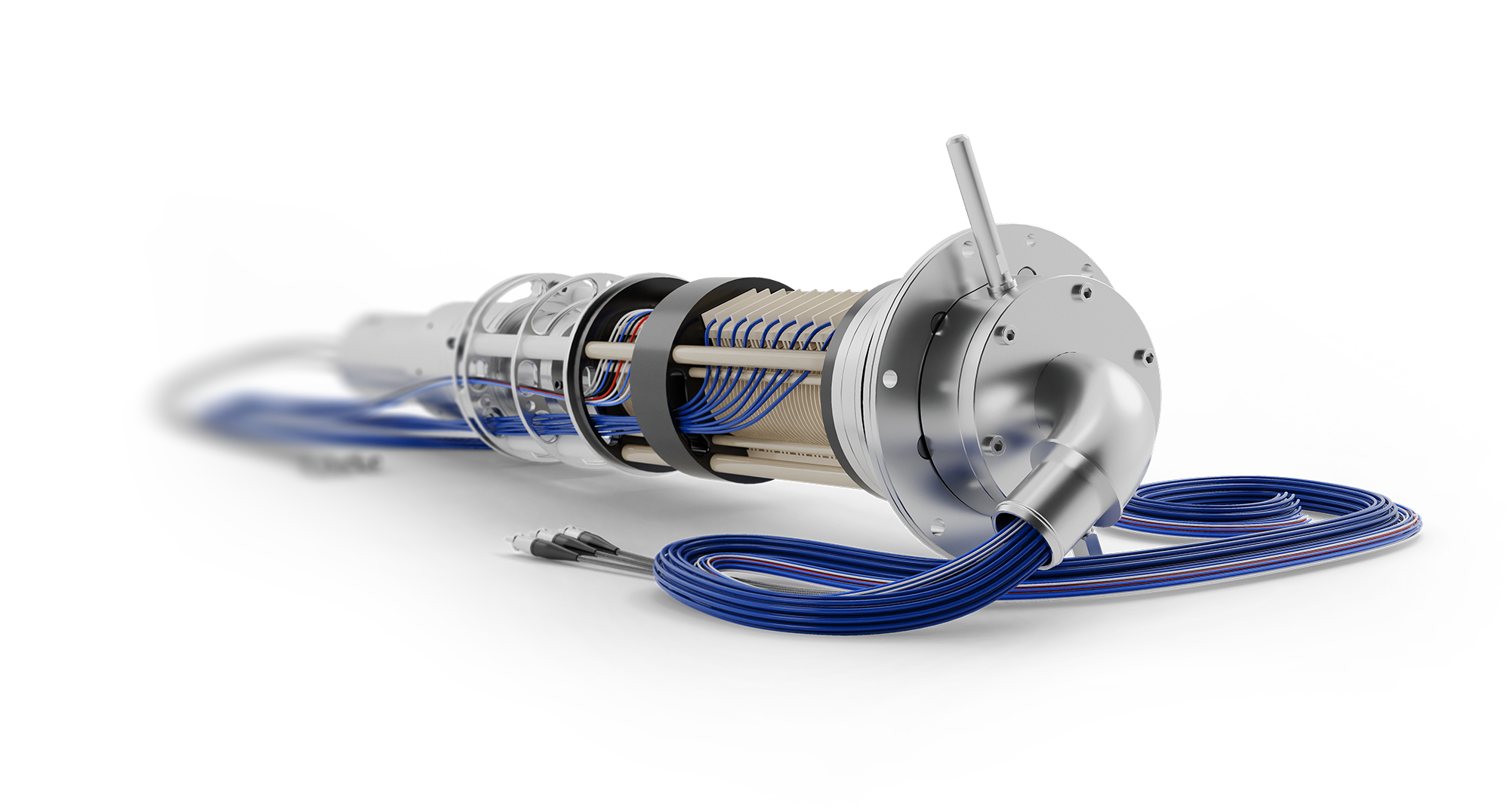
Pressure compensated modular design with integrated fiber optics. Built on fiber brush technology for clean and stable transmission of power and signal.
Subsea Slip Rings
Engineered For 3,000 m Missions
Penlink’s next generation subsea slip ring pairs robust mechanics with integrated fiber optics to deliver reliable power, signal, and data transmission for ROVs, probes and other deep‑sea equipment. With a pressure‑compensated design and compact modular architecture, the slip rings are purpose‑built for optimal uptime below the surface. The mechanical interface follows a 1:1 industry‑standard design, ensuring seamless integration into existing subsea systems without the need for custom adaptations.
What Makes Penlink Different
- Slip ring specialists with a long track record in marine/offshore systems.
- Our fiber‑brush contact system is designed to avoid carbon‑brush debris and reduce maintenance.
- Industry‑standard compatibility: the 1:1 design approach ensures straightforward replacement, upgrades and interoperability across established subsea equipment platforms.
Technical Highlights
Eliminates cable twists
Our Slip Rings allows for continuous 360° transfer which eliminates torque build‑up and reducing fatigue‑related failures.
Low‑noise power & data (vs. carbon brushes)
Fiber‑brush contacts provide multiple parallel micro‑contacts with low contact force. This minimizes electrical noise, contact chatter, and debris generation, ensuring stable power delivery and clean signal integrity.
1:1 drop‑in replacement
Mechanical envelope, flange, and connector compatibility enable 1:1 replacement with existing units, which means no re‑machining, no rewiring.
Built for depth: oil‑filled / pressure‑compensated
An oil-filled slip ring design equalises hydrostatic pressure and mitigates moisture ingress, maintaining stable performance during long-term subsea deployment.
Power + fiber optics in one interface
Supports high‑current circuits alongside fiber‑optic data through rotation for communication and robust power delivery.
Stable under harsh dynamics
Contact geometry maintains constant pressure through vibration, shock, and rapid torque steps (e.g., winch start/stop, plough load changes).
Low maintenance, high uptime
Low‑wear contacts and sealed corrosion‑resistant construction cut offshore service intervals and unplanned stops.
Safe High Power Transfer
Carefully designed for optimal distance and separation of rings and brushes to ensure a safe transfer of power at high voltage.
Subsea FORJ
Looking to replace your fiber optical rotary joint?
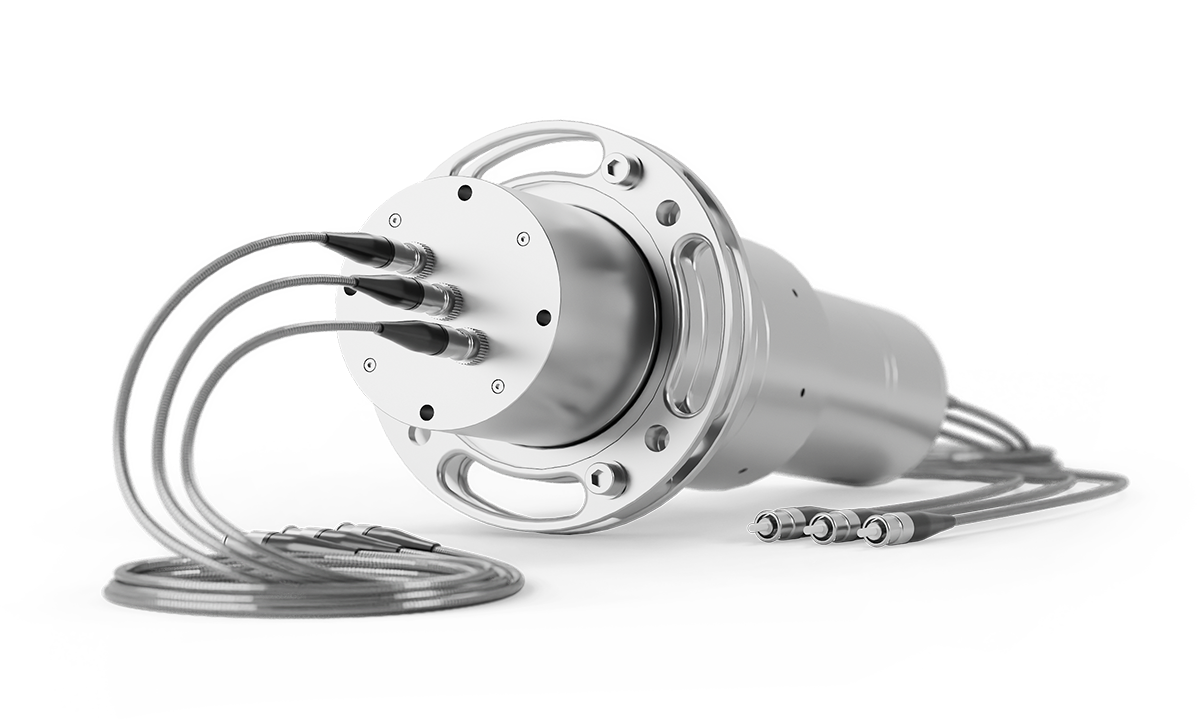
Our subsea FORJ offers a 1:1 mechanical interface with industry‑standard units, making drop‑in replacement effortless.
Built in SS316 stainless steel with low‑loss single‑mode channels (up to 7), it delivers a more robust and stable optical performance—and with a significantly shorter lead time than typical market alternatives.
Why choose Penlink for subsea?
Proven At Depth
Configurable operational depth up to 3,000 m for deep‑water work scopes. Oil-filled and pressure-compensated.
Integrated Fiber‑optics
Single‑mode or multi‑mode FORJ with common connector interfaces (ST, SC, LC, FC) and 1–7 fiber channels to match bandwidth needs.
Stable, Low‑debris Contact System
Fiber brush technology—no carbon‑brush debris—to keep signal paths clean and service intervals long.
Modular & Future‑proof
Mechanical platform accepts power, signals, and fiber modules and remains compatible with top‑side slip rings for seamless integration.
High‑voltage Capable
Architecture supports high‑voltage transmission for compact, power‑dense builds.
Built for the Impossible.
FAQ
What voltage and ampere is supported
Penlink slip rings supports up to 5000v and 20A per ring in current configuration.
What fiber options can you integrate?
Single‑mode or multi‑mode FORJ, standard interfaces (ST/SC/LC/FC), and 1–7 channels depending on your telemetry and video needs.
What data buses are supported?
Common standards include COAX, EtherCAT, and 1 Gb Ethernet; bandwidth depends on the ring size and configuration.
What is the maximum operating depth?
Current configurations target up to 3,000 m; we’ll validate your exact rating during the design review.
Let's Talk
Ready to Build Your Subsea Solution?
Penlink’s subsea slip rings are trusted across offshore operations where reliability, clean data transfer, and 360° rotational freedom are essential:
- Stable power and data for deep‑water vehicle control.
- Designed for subsea operations.
- Fiber‑optic transmission for reliable high-speed data communication.
Every subsea application has unique requirements—depth rating, voltage/current, fiber channel count, bus systems, and mechanical integration. Our engineering team helps you get it right.
Tell us about your project, and we’ll design a configuration tailored to your environment and duty cycle.