Options Available For Our Microchannel Plates
TruFlite™ Microchannel Plate
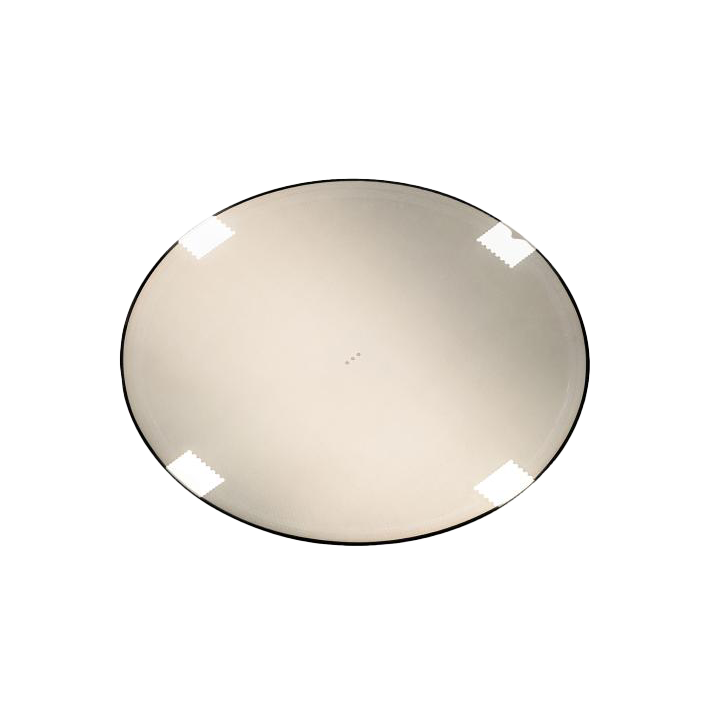
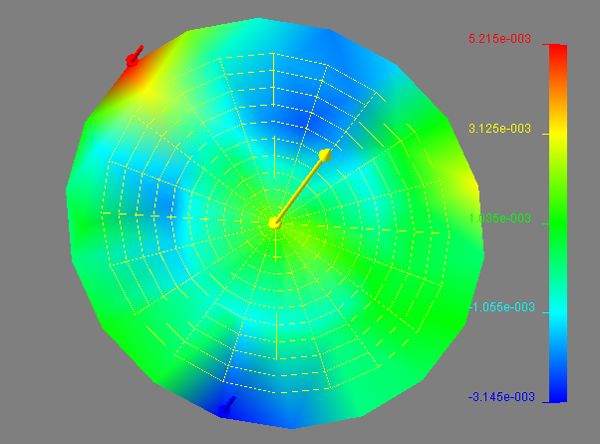
Used in Time of Flight Mass Spectrometry, these microchannel plates have been manufactured to control input surface flatness to +/- 5 microns in order to reduce ion arrival time jitter.
TruFlite™ microchannel plates are designed to control and optimize two common errors in Time of Flight Mass Spectrometry – ion arrival time and time jitter. As the manufacturer, Photonis is able to provide these detectors as standalone pieces or as part of our Gen2 UltraFast TOF detector assembly.
TruFlite™ MCPs are available in 18mm sizes with a bias angle of 19o and a 2µm pore size, or a 25mm or 40mm MCP with a bias angle of 19o and a 5µm pore size. Typical flatness can be controlled at the time of manufacture to within 10µm across an MCP. (Note that 2µm MCPs are not sold individually but can be ordered in complete Gen2 UltraFast™ TOF assemblies.)
Glass Capillary Arrays
Glass Capillary Arrays consist of millions of precision glass capillary tubes fused together to produce a uniform and mechanically rigid structure. They can be used for sample filtration, collimation or as optical beam line splitters. They can be made into custom sizes and shapes to best fit your requirement.
Our Glass Capillary Arrays have exceptional thermal and chemical stability, and can be manufactured to withstand temperatures in excess of 450°C for use in harsh environments.
It can be provided with a ground matte finish or a polished service. The input surface can also be blackened to minimize light scattering. Solid border Glass Capillary Arrays are compatible with most existing Millipore or Nuclepore equipment, or fitted within a metal flange or mounted on glass tubing for high temperature or high pressure applications.
Stripline Microchannel Plate
These microchannel plates have been lined with several layers of electroding material to sequentially capture high-speed charged particle events. Stripline MCPs are ideal for high energy physics research when documenting or diagnosing the sequence of high-speed occurrances.
Stripline MCPS are capable of capturing sequential images of charged particle events at very high speeds, making them extremely useful diagnostic tools for documenting nuclear events during energy research and process development. Stripline MCPs use electrode strips to create dielectric polarization, allowing for the movement of ions toward or away from a positive or negative charge. The result is that each individual microchannel within the MCP can be turned on or off sequentially as fast as the electrical charge can permeate the circuit.
Stripline MCPs are made with image grade microchannel plates, using the patented MountingPad™ technology to minimize warping and cracking while allowing trapped plasma gasses to vent, eliminating noise. Pitch, pore, and bias angle can be specified.